Latest News
Record four Notre Dame students named 2024 Goldwater Scholars
A record four University of…

Research
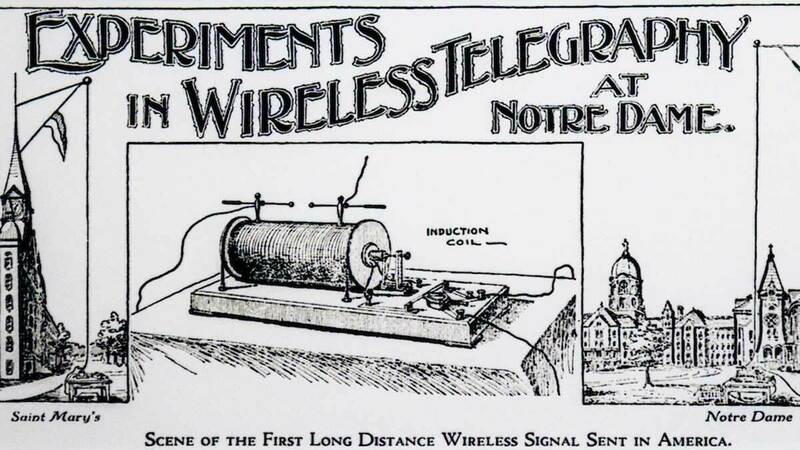
Notre Dame marks the 125th anniversary of the first known wireless transmission in the United States

University
Advancing research, education and policy efforts to sustain and enhance democracy

Research
For scholars who share a common passion for inquiry because of what it can reveal about our world and ourselves, there is opportunity here.

Faith & Service
Notre Dame is animated by a faith that inspires us to seek knowledge because of the powerful tool it can be to improve humankind.

Global
Notre Dame seeks to be in the world, and to bring the world to Notre Dame, because inquiry and scholarly exchange are enriched by the pursuit of cultural fluency.
Notre Dame At Work
Latest News
A record four University of…
Research
The University of Notre Dame is celebrating 125 years of wireless research, education and innovation with a modern re-enactment of one of the first long-range wireless transmissions conducted in the United States and a full-day symposium of panels and…
Research
Notre Dame AAAS Fellows Beth Archie, Peter Burns, Nitesh…
Latest News
University of Notre Dame junior Kayle Lauck has been named a 2024 Truman Scholar. She is the University’s 12th Truman Scholar since 2010 — a group that includes three Rhodes Scholars: Alex Coccia (’14), Christa Grace Watkins (’17) and Prathm Juneja (’20).
Notre Dame In Focus

Community
How Notre Dame students and faculty are uncovering the legacy of South Bend's underrepresented baseball teams


Colleges and Schools
New class explores the history, significance, and making of stained glass

“The world needs a university that graduates men and women who are not only capable and knowledgeable, but who accept their responsibility to serve others – especially those in greatest need.”
— Rev. John I. Jenkins, C.S.C.
Notre Dame In Motion